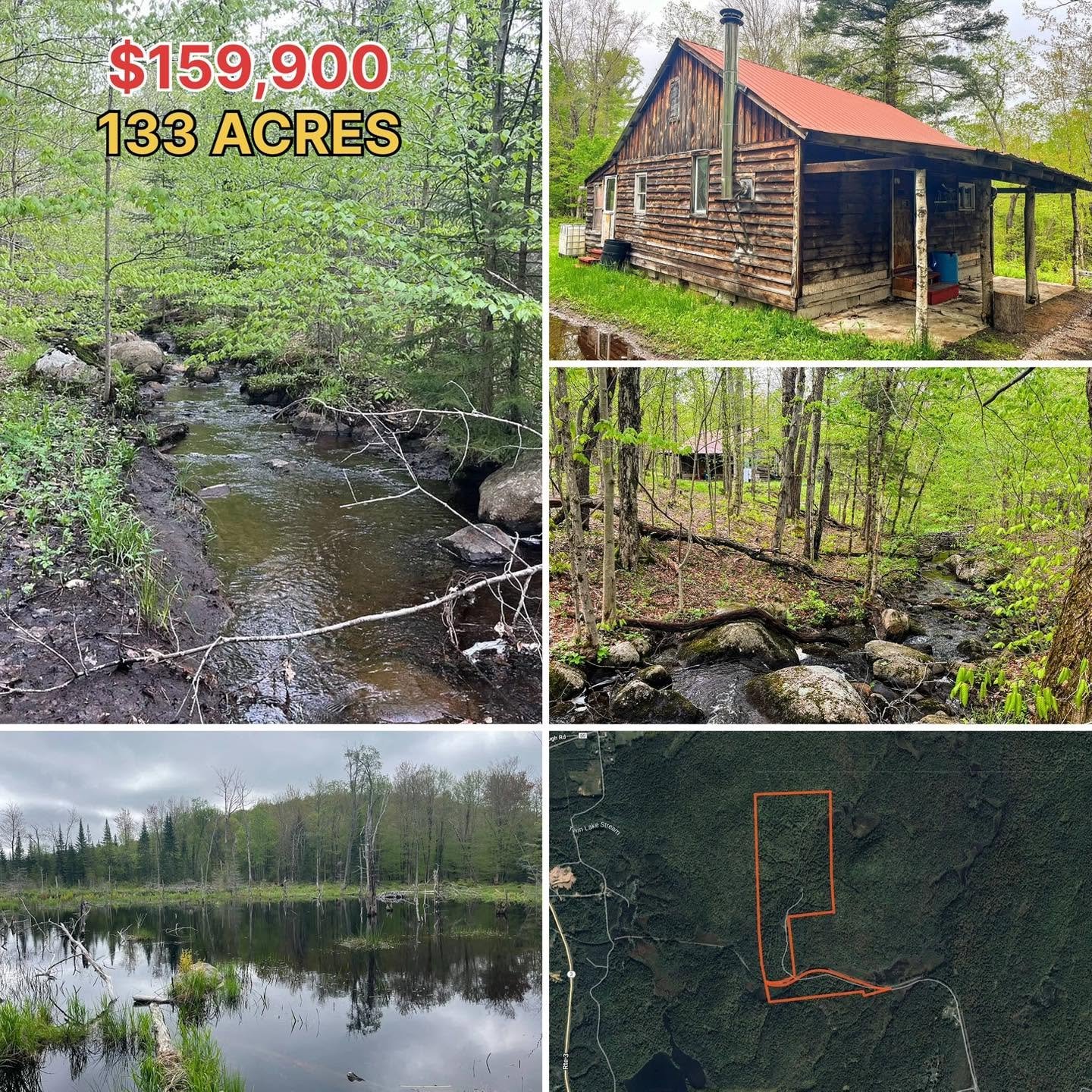

133.6 Acres in New York’s Adirondacks Listed for $159,900 With a Rustic Hunting Cabin
Large wooded properties with an existing cabin, private trails, and access to surrounding wilderness can appeal to buyers seeking a recreational retreat far from densely developed areas. In Star Lake, New York, a 133.6-acre parcel off Laplante Road offers a combination of forested land, water features, and a rustic hunting camp.
The property is listed for $159,900, which works out to approximately $1,197 per acre based on the stated acreage and asking price. The listing describes a wooded hardwood forest, an existing hunting cabin, a network of trails, and a boundary with land associated with the Aldrich Pond Wild Forest.
For buyers interested in hunting, hiking, seasonal camping, or exploring an off-grid property, the combination may be worth investigating. However, the cabin’s condition, winter access, land-use restrictions, and the status of utilities all need careful review before a purchase.
Property Overview: More Than 133 Acres of Wooded Land
Located off Laplante Road in Star Lake, NY 13690, the property reportedly contains approximately 133.6 acres of predominantly wooded land. Its size may appeal to buyers who want room for outdoor recreation, wildlife observation, and private trails without immediately undertaking a major construction project.
The supplied listing information also describes more than 4,000 feet of private gravel road, an established trail network, a woodland stream, a brook near the cabin, and a small beaver pond.
These features can provide practical value to someone who intends to use the property regularly. Existing access routes may reduce the need to create entirely new roads, while cleared trails can make portions of the acreage easier to explore.
Nevertheless, the condition and legal status of the roads and trails should be confirmed. Buyers should establish which routes are within the property boundaries, whether any easements apply, and what maintenance responsibilities come with private access.
A Rustic Hunting Cabin in the Woods
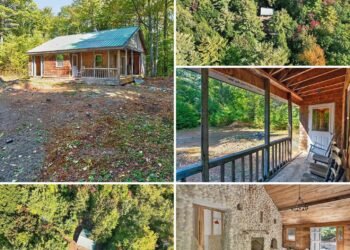
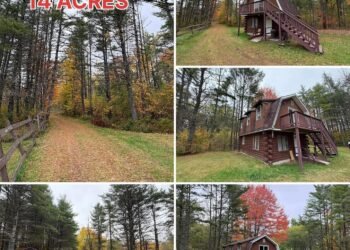
One of the property’s main attractions is an existing rustic hunting cabin. Although the property is reportedly classified in the listing records as unimproved land with zero formal bedrooms and bathrooms, the cabin offers a basic shelter option for recreational use.
The supplied description mentions an open floor plan, built-in bunks, a wood stove, and a screened-in front porch. These features are consistent with a simple hunting camp rather than a conventional modern residence.
For someone who enjoys spending time outdoors, the cabin could potentially serve as a base for hunting trips, hiking weekends, or seasonal stays. Its existing presence may also reduce the need to start from an entirely undeveloped site.
However, buyers should not assume that the structure is move-in ready, legally approved for overnight occupancy, or suitable for year-round use. An inspection should assess the roof, foundation, framing, stove and chimney, ventilation, and any signs of moisture or structural deterioration.
It is also important to determine whether the cabin has permits or other documentation and whether local requirements allow it to be repaired, expanded, replaced, or used for the buyer’s intended purpose.
Direct Boundary With Aldrich Pond Wild Forest
The listing identifies a boundary with the Aldrich Pond Wild Forest, a feature that may be particularly attractive to outdoor enthusiasts. Adjoining public land can offer opportunities to explore a broader natural landscape, subject to the rules governing the public property.
However, buyers should carefully verify the exact boundary and the public land’s access arrangements before treating this as a major advantage. The presence of a neighboring state-owned parcel does not automatically guarantee public access from the subject property or grant the owner exclusive use of state land.
The listing’s claim that the adjoining state land is effectively inaccessible to the general public should also be independently checked. Public-land access can depend on mapped boundaries, legal rights-of-way, easements, and state management policies.
Similarly, while state ownership may limit certain forms of private development on that adjoining parcel, it does not guarantee permanent isolation or an absence of changes in public access and management. Buyers should review official New York State Department of Environmental Conservation maps and records to understand what borders the property and how the neighboring land may be used.
Streams, a Brook, and a Beaver Pond
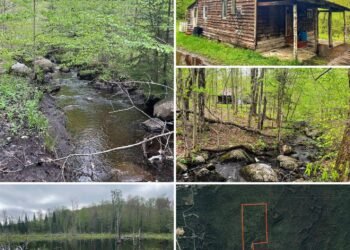
The property reportedly includes a woodland stream, a brook near the cabin site, and a small beaver pond. These natural features may contribute to the appeal of the landscape and provide opportunities for observing wildlife.
Streams and ponds can also influence drainage, seasonal conditions, and the location of suitable building sites. Buyers should check whether any low-lying areas are prone to flooding, whether erosion affects the banks, and whether wetlands or water-related regulations limit certain activities.
The presence of surface water should not be interpreted as proof of a safe drinking-water supply. Anyone planning to use water from a stream or pond for domestic purposes would need to investigate testing, treatment, permitting, and other applicable requirements.
The listing also refers to wildlife such as deer, bear, turkey, and moose. The surrounding forest may provide habitat for a variety of species, but sightings and hunting opportunities are not guaranteed. Prospective hunters should review current New York hunting regulations, seasons, licensing requirements, and property-access rules.
Private Roads and Seasonal Access
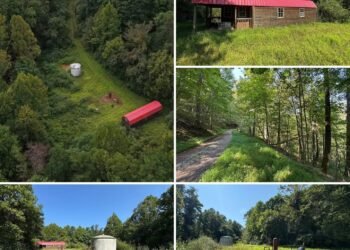
The reported network of private gravel roads and trails is an important part of the property’s practical appeal. During suitable weather, these routes may help owners reach the cabin and explore different parts of the acreage.
The supplied listing description indicates that the road is generally usable by car or truck during spring, summer, and fall, while winter access may be more difficult because the road is not municipally plowed.
This limitation could be significant for buyers who expect to visit throughout the year. Snow, ice, mud, and runoff can affect private roads, and access conditions may vary depending on weather and maintenance.
Before purchasing, buyers should visit the property under realistic conditions if possible and determine whether the road is maintained, who is responsible for that maintenance, and whether emergency services or utility contractors can reach the cabin.
Anyone planning to use an ATV, snowmobile, or other recreational vehicle should also confirm applicable legal restrictions and avoid assuming that every trail can be used for every purpose.
An Off-Grid Property With No Confirmed Modern Utilities
The property is presented as a rustic, off-grid hunting camp rather than a fully serviced home. The supplied description does not identify a conventional grid-connected electrical system or a standard modern septic system.
That means buyers who want more comfortable or extended stays may need to investigate alternative arrangements. Depending on the property’s characteristics and applicable rules, possibilities could include solar power, a generator, approved composting sanitation, or another permitted wastewater solution.
Each option involves installation, maintenance, and operating costs. Solar systems, for example, require suitable equipment and storage capacity, while generators require fuel and ongoing servicing. Sanitation options must comply with relevant health and environmental regulations.
Before planning any improvements, buyers should contact the appropriate local authorities to determine what systems are allowed and whether permits are required. They should also investigate whether a conventional septic system is feasible and whether a reliable water source can be established.
A remote parcel may offer a quieter, more self-reliant lifestyle, but it can also require more planning and maintenance than a property connected to standard utilities.
Asking Price and Listing History
At an asking price of $159,900 for 133.6 acres, the property comes to approximately $1,197 per acre. This is a straightforward calculation using the supplied asking price and acreage, not an independent appraisal.
The provided listing history indicates that the property was first offered for $169,900 in May 2025, followed by a reduction to $159,900 in October 2025. It reportedly moved to contingent status in November 2025 before returning to the market at $159,900 in May 2026.
A contingent status can mean that an offer was accepted subject to conditions, but it does not establish why a transaction failed to close. Financing difficulties are one possible explanation, but buyers should not assume that this was the reason without confirmation.
The asking price per acre may be useful when comparing other large wooded parcels in the region. However, fair comparisons should account for road access, terrain, water features, cabin condition, utility availability, legal restrictions, and recent local sales.
The cabin and existing access infrastructure may add practical appeal, but their value depends on their condition and usability. Buyers should also factor in potential costs for repairs, road maintenance, sanitation, water, insurance, and any planned improvements.
Financing a Large Recreational Parcel
Financing can be more complicated for a property marketed primarily as unimproved land with a rustic cabin. Traditional residential mortgage programs may not be appropriate, particularly if the cabin lacks conventional utilities, approved sanitation, or the documentation required by a lender.
Potential buyers should speak with lenders experienced in vacant land, recreational acreage, or rural properties. Available financing terms vary, and land loans may require larger down payments or different interest rates than conventional home mortgages.
Cash purchases are another possibility, but buyers should avoid committing their entire budget to the purchase price without accounting for inspections, legal work, taxes, insurance, access maintenance, and necessary repairs.
The most suitable financing approach will depend on the buyer’s financial situation, the property’s legal classification, the cabin’s status, and the lender’s requirements.
Annual Property Taxes and Ownership Costs
The supplied information reports annual property taxes of approximately $1,785. Buyers should confirm the current tax bill and assessment with the relevant local tax authorities.
Taxes are only one part of the ongoing expense of owning more than 130 acres. Owners may also need to budget for maintaining private roads and trails, managing vegetation, inspecting the cabin and wood stove, addressing storm damage, and arranging suitable insurance.
Remote properties can also present additional costs if repairs require contractors or equipment to travel long distances over private roads. Winter access limitations may further affect maintenance and emergency planning.
A realistic ownership budget should therefore include both the annual carrying costs and a reserve for unexpected repairs or infrastructure work.
Who Might Be Interested in This Adirondack Property?
The parcel may appeal to several types of buyers, provided its restrictions and practical limitations match their plans.
Hunters and outdoor enthusiasts may value the wooded acreage, cabin, and trail network as a potential base for seasonal recreation. They should verify hunting regulations, access rights, and the cabin’s condition before relying on it for overnight stays.
Buyers seeking a wilderness getaway may appreciate the streams, pond, forest setting, and neighboring public land. They should nevertheless confirm the precise boundary with state land and avoid assuming that the property guarantees permanent isolation.
Off-grid enthusiasts may see potential in adapting the cabin for simpler recreational stays. Any plans for solar power, sanitation, a water supply, or expanded use should be evaluated against local requirements and the property’s physical conditions.
Long-term landowners may be attracted to the acreage and existing access routes. As with any rural land investment, future value depends on market conditions, ownership costs, permitted uses, and the property’s legal and physical characteristics.
Essential Due Diligence Before Buying
Before making an offer, prospective buyers should investigate several important matters:
- Boundary and survey: Confirm the stated 133.6 acres, property corners, road locations, and the exact boundary with adjoining state land.
- Legal access: Review recorded easements, road rights, maintenance agreements, and any restrictions affecting access.
- State land use and access: Consult official state maps and management information to confirm the status of Aldrich Pond Wild Forest and any public access routes.
- Cabin condition and legal status: Inspect the structure, stove and chimney, roof, foundation, and documentation. Confirm what uses are permitted.
- Water and wetlands: Identify streams, ponds, wetlands, and flood-prone areas, and determine how they may affect construction or other improvements.
- Sanitation and water supply: Investigate whether approved wastewater arrangements and a reliable water source are feasible.
- Seasonal access: Assess road conditions, snow and mud limitations, drainage, maintenance costs, and emergency access.
- Taxes and insurance: Confirm current taxes and seek insurance guidance for a remote property with a rustic cabin and limited infrastructure.
- Local regulations: Contact the relevant town, county, and state agencies about zoning, construction, shoreline or wetland restrictions, and any other rules that could affect the intended use.
These steps can help establish whether the property is suitable for the buyer’s plans and whether additional costs could materially change the overall investment.
Final Thoughts
The 133.6-acre property off Laplante Road in Star Lake, New York, is listed for $159,900 and reportedly includes a rustic hunting cabin, private roads and trails, woodland water features, and a boundary with Aldrich Pond Wild Forest.
Its size and existing recreational features may appeal to hunters, outdoor enthusiasts, and buyers seeking a remote seasonal retreat. At approximately $1,197 per acre, the asking price offers a useful starting point for comparison, but it does not prove that the property is underpriced or that its improvements are ready for use.
The most important considerations are winter access, the cabin’s condition and legal status, water and sanitation options, the true extent of adjoining public land, and the rules governing future improvements. Buyers who investigate these details carefully will be better positioned to determine whether the property fits their needs and budget.
This article is based on the supplied listing information and is intended for informational purposes only. Listing status, property boundaries, taxes, access rights, cabin condition, utility options, and permitted uses should be independently verified before purchase.


Listed on Zillow