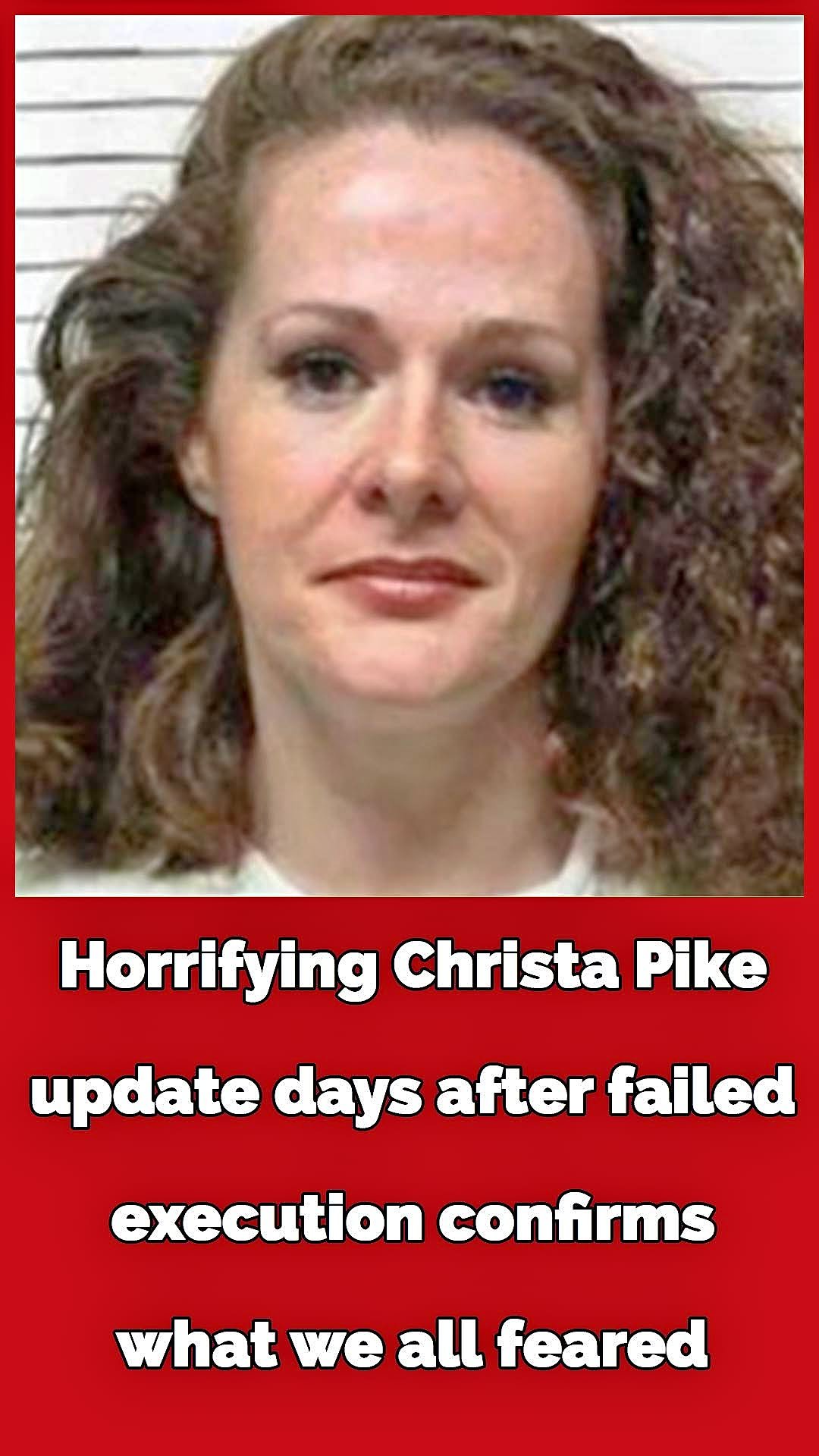

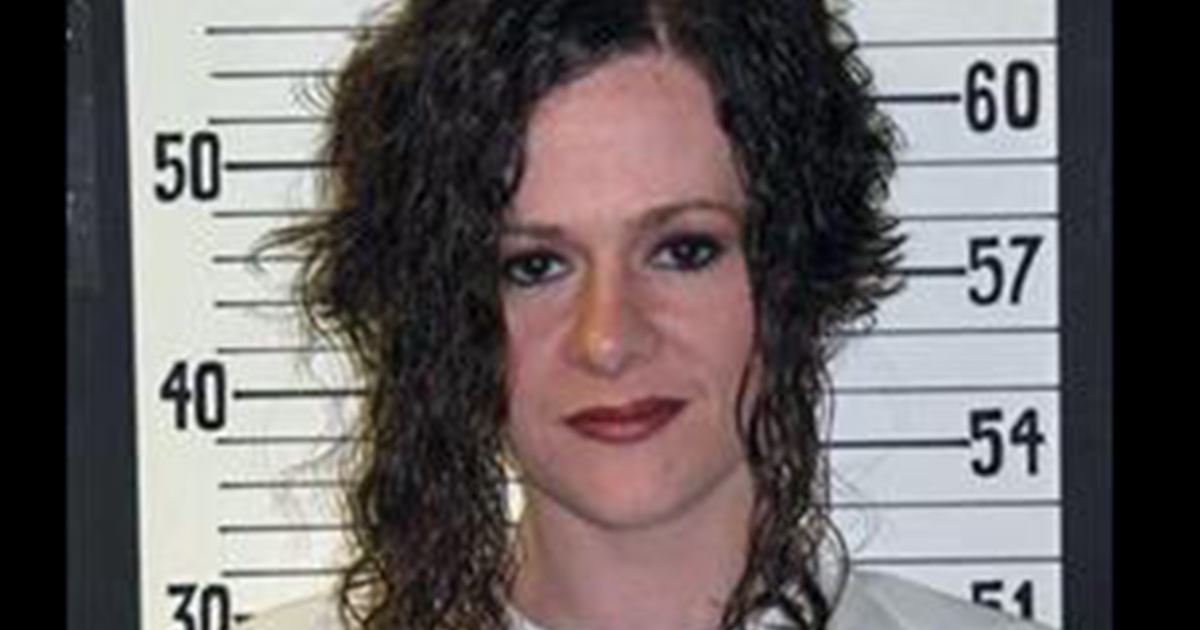
Christa Pike was supposed to be put to death in Tennessee last Wednesday.
Instead, the 50-year-old remains unconscious and critically ill in a hospital, still on a ventilator as doctors work to remove doses of the lethal barbiturate pentobarbital from her system.
Pike was given two doses of the drug during the execution attempt, but according to a court filing from her legal team, problems with the IV lines meant the pentobarbital entered her body rather than properly reaching her bloodstream.
Four days later, doctors are still dealing with the consequences as Pike remains unconscious in a heavily guarded hospital room.
Pike’s attorney, assistant federal defender Stephen Ferrell, provided an update on her condition during an appearance on CNN’s State of the Union.
He said doctors are still working to clear the two doses of pentobarbital from her system.
”It remains the same. She’s still in the hospital on a ventilator, critically ill.
”We don’t really know the prognosis yet, and may not know for several days.”
Ferrell said he was not aware of Pike ever regaining consciousness following the execution attempt.
Her armed ”turned purple”
The long-term consequences remain unclear, with her attorney warning that she may not fully recover.
”We don’t know what the prognosis is, as in the long-term prognosis… she may not fully recover,” he said.
”We just don’t know any of this. We have had no discussions about this [what happens next]. The Tennessee attorney general’s office, so far, has not given us any indications of what their intentions will be.”
Pike’s legal team has also described the condition of her arms following the failed execution, saying they were “swollen, burned, and blistered.” Her attorneys also said her arm appeared to “turn purple” during the procedure.
According to Pike’s attorneys, she could be heard crying, whimpering and breathing heavily throughout the procedure.

At one point, she reportedly said, “My arm feels like it’s about to burst open,” before later asking, “Does this happen like that?”
Pike’s attorney, Randy Spivey, has sharply criticized Tennessee authorities, claiming the execution team in Nashville spent about an hour struggling to find a suitable vein.
The defense attorney said he counted at least seven needles being used in Pike’s left arm alone, adding that one appeared to be bent when it was removed following an unsuccessful attempt.
Escaped from Pike’s veins
Dr. Joel Zivot, an Atlanta-based professor of anesthesiology and surgery who was brought in as an expert by Pike’s defense team, believes the pentobarbital may have escaped from Pike’s veins and entered the surrounding tissue.
He says that could explain the burns her attorneys have described.
“My opinion is that the intravenouses, that were placed in veins, that the veins ruptured, and the intravenous catheter was no longer in the vein, and when the pentobarbital was injected, instead of going into the circulation, it went into the tissue around the vein and caused burning, which that particular chemical pentobarbital will definitely do,” Dr. Zivot explains.
According to Zivot, one thing is certain: enough of the drug did not reach Pike’s bloodstream to kill her.
“If a person is given the quantity of pentobarbital that the state uses, and it gets into the circulation and into the brain in the, in the quote ‘right way,’ it will kill you. So the fact that she didn’t die can only mean that the pentobarbital was never in a sufficient quantity in her bloodstream to cause death,” Dr. Zivot explains.
Hemodialysis
In cases of severe barbiturate poisoning, there is no specific antidote for pentobarbital. Treatment primarily involves intensive care while the body breaks down and eliminates the drug. This may include:
- A respirator/ventilator to keep the patient breathing — which Pike is already on.
- Close monitoring of blood pressure, heart function, oxygen levels, and organ function. Fluids and medications as needed to support blood pressure.
In very severe cases like this one, doctors may consider treatments such as hemodialysis (blood filtration) to help speed up the elimination of certain barbiturates. Hemodialysis has also been used in published cases involving massive pentobarbital poisoning.