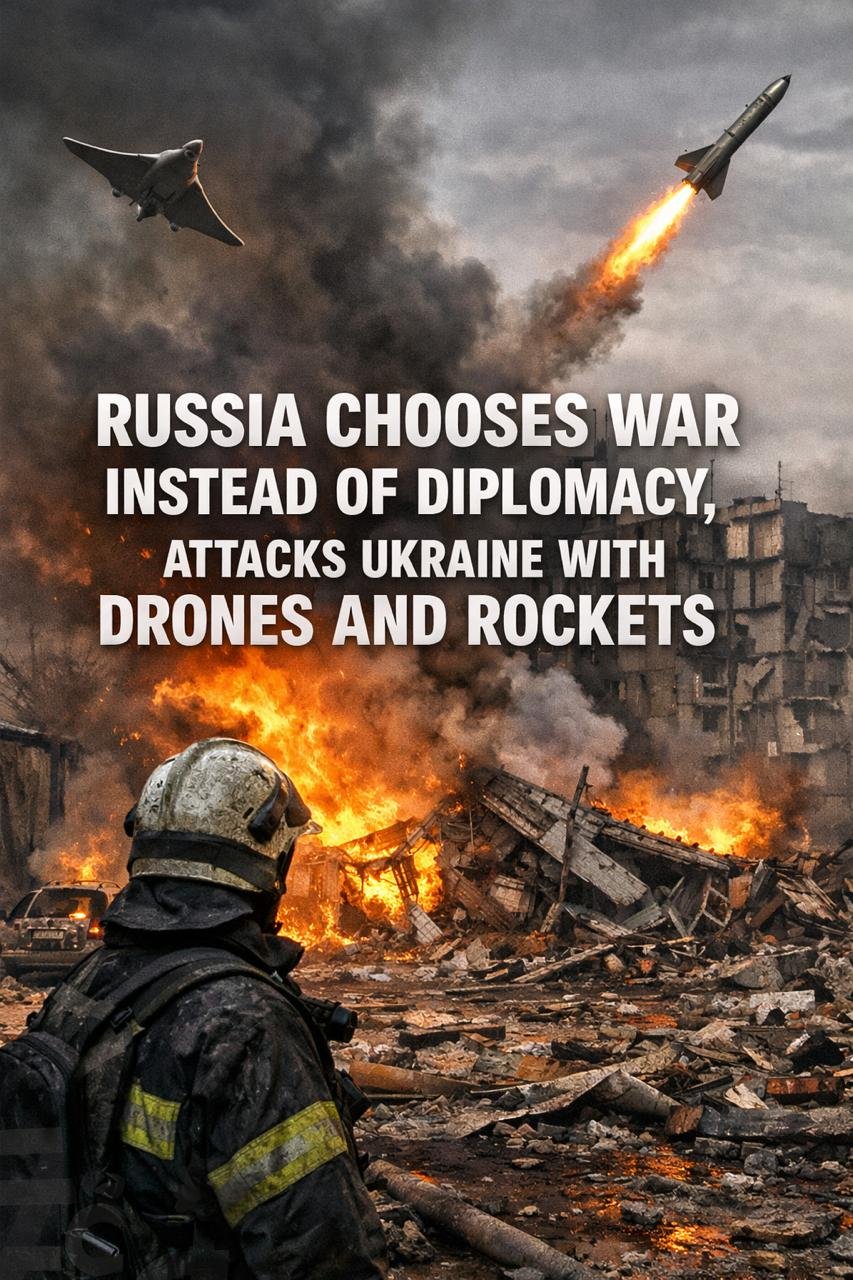

Russia has launched a massive new wave of drone and rocket attacks on Ukraine just as fresh peace talks were set to begin, underscoring that Moscow is escalating on the battlefield instead of investing in diplomacy.
Russia Escalates War on the Eve of Peace Talks
Ukrainian officials report that Russia fired around 450 attack drones and roughly 70 missiles of various types in a single overnight barrage, one of the largest coordinated air assaults of 2026 so far. The strikes hit multiple regions, including Kyiv, Kharkiv and Dnipro, with impacts recorded at more than two dozen locations across the country. This latest round of attacks comes just one day before U.S.-brokered talks in Abu Dhabi, which were billed as a new chance to explore a negotiated end to the nearly four‑year‑old full‑scale war.
Drones and Rockets Target Energy and Civilians
According to Ukraine’s air force and regional authorities, Russia used a mix of cruise and ballistic missiles together with long‑range attack drones launched from air and ground platforms. Ukrainian air defenses shot down the vast majority of incoming drones and many missiles, but dozens still got through, damaging residential buildings, power plants and combined heat and power facilities that supply heating and electricity in the middle of a harsh winter. Temperatures in Kyiv have plunged well below freezing, and hundreds of thousands of people have faced power cuts and heating disruptions as a result of repeated strikes on critical infrastructure.
“War Instead of Diplomacy”: Zelensky’s Message
President Volodymyr Zelensky has framed the attacks as clear proof that Russia is choosing war over diplomacy. He stressed that the Kremlin is deliberately exploiting the coldest days of winter to terrorize civilians by striking the energy system that keeps homes lit and heated. Zelensky argues that while Ukraine remains open to serious negotiations, it will not accept any deal built on capitulation or territorial surrender. He has urged Western partners to increase pressure on Moscow and accelerate deliveries of modern air‑defense systems so Ukraine can better protect its skies and population centers.
International Reaction and Pressure on Moscow
The massive airstrike has triggered new condemnation from Ukraine’s allies, many of whom see it as a direct attempt to undermine U.S. mediation efforts. NATO officials visiting Kyiv have reiterated support for Ukraine’s right to self‑defense and called for “maximum pressure” on Russia through sanctions, diplomatic isolation, and continued military assistance. Western governments are also debating additional measures to shield Ukraine’s power grid, including more air‑defense interceptors, radar systems, and emergency energy support to keep essential services running.
Outlook: More Attacks, Uncertain Diplomacy
Analysts note that Russia has repeatedly paired major missile and drone barrages with diplomatic milestones, using military pressure to strengthen its bargaining position or sabotage talks entirely. At the same time, Ukraine has expanded its own long‑range drone campaign against targets inside Russia, aiming to disrupt logistics and increase the cost of Moscow’s aggression. With both sides escalating in the air while talking about peace at the negotiating table, the immediate future of the conflict looks set to remain highly volatile, and meaningful diplomatic breakthroughs appear uncertain.
This article targets key search phrases such as “Russia drone and rocket attacks on Ukraine,” “Russia chooses war instead of diplomacy,” and “Russian strikes on Ukraine energy infrastructure 2026” to improve visibility in news and geopolitical search results.