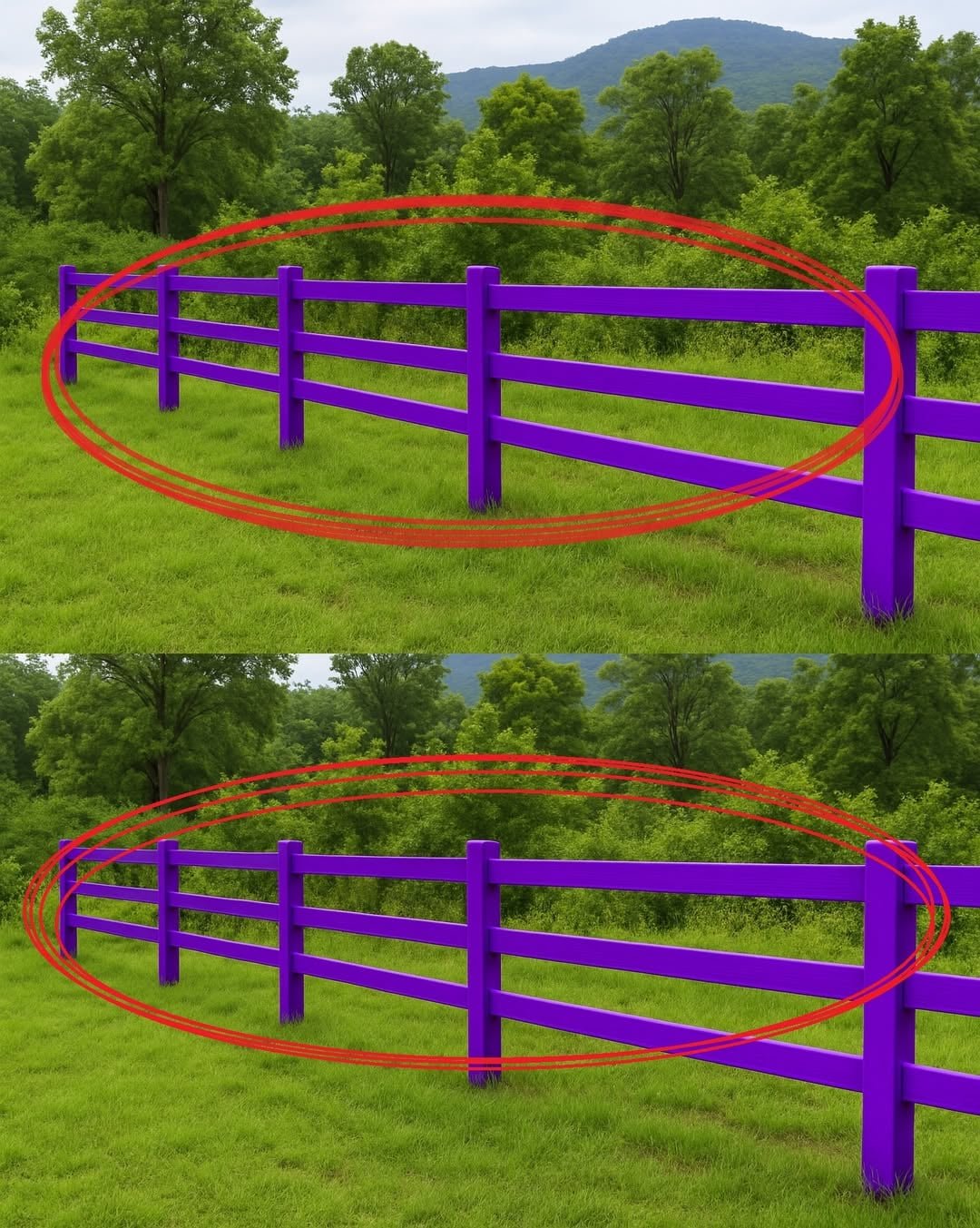

If you’ve ever noticed a purple fence along a quiet street or rural trail, it’s likely more than just a whimsical color choice. In many regions, purple paint is used as a legal signal for “no trespassing.” Rather than relying on signs that can fade, blow away, or be ignored, property owners use this vivid color to send a clear and lasting message.
In some states, including North Dakota, Minnesota, and Wisconsin, purple paint is officially recognized under state law as a “no trespassing” marker. Property owners are allowed to paint the top and bottom portions of fence posts, trees, or other boundary markers with purple stripes, often about 8 inches long and placed every 20 yards along the property line. This method provides a highly visible warning while being cost-effective and durable compared to traditional signs.
The practice is rooted in both practicality and enforcement. Courts and law enforcement recognize purple markings as a legal notice that trespassing is prohibited, giving property owners protection if someone disregards the warning. For hikers, bikers, and other outdoor enthusiasts, spotting a purple-painted fence or tree is a subtle but important signal to respect private property boundaries.
So, the next time you see a purple fence or stripe along a trail, remember: it’s not just decorative—it’s a legally recognized way of saying “keep out.” This simple paint mark helps maintain privacy, safety, and respect for landowners, while keeping communities aware of property boundaries in a clear, unmistakable way.