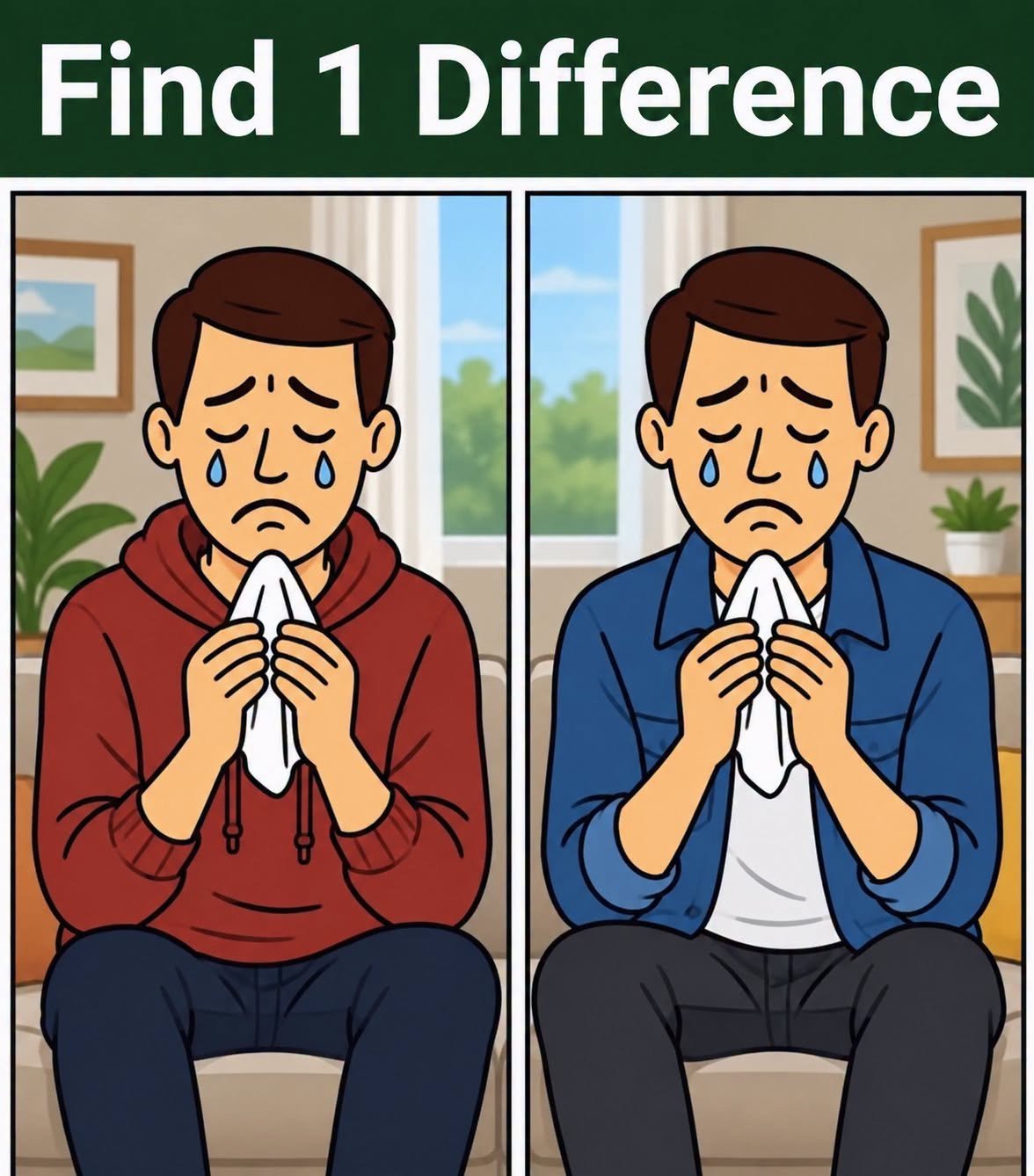

What makes this puzzle unsettling is not the drawing itself, but the quiet realization that your brain wants the images to match. When almost everything lines up, your mind smooths over tiny flaws, insisting there is nothing to find. Only when you slow down—eyes tracing the curve of his eyebrows, the angle of each tear, the folds in his shirt—does doubt begin to creep in.
That doubt is the real heart of the challenge. By forcing you to move methodically from hair to hands, tissue to trousers, it exposes how easily perception can be fooled by expectation. The missing or altered detail, once found, feels shockingly obvious, as if it had been mocking you the entire time. Yet the real victory is not just spotting the change, but noticing how different the world looks when you finally choose to see instead of assume.