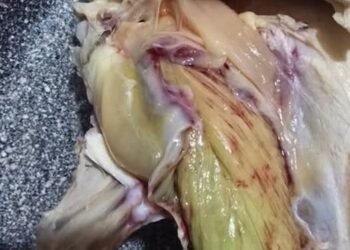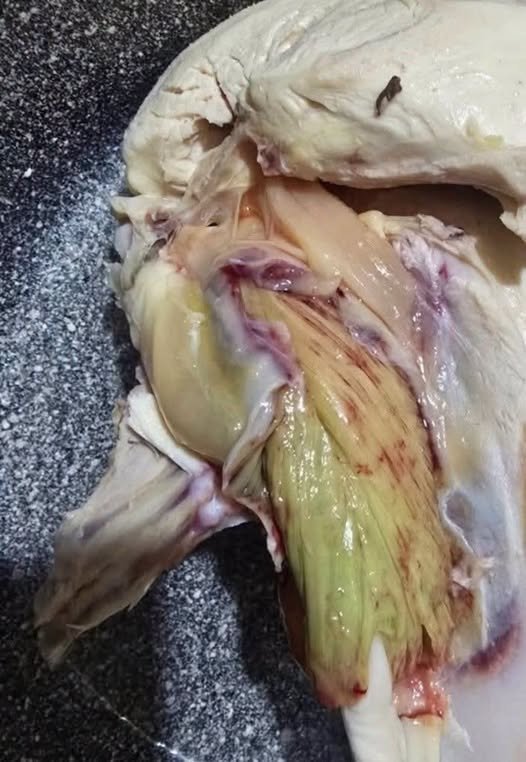

That shocking green can come from causes that range from harmless to genuinely dangerous, and your eyes alone can’t always tell the difference. Bruising from rough handling or flapping can trap blood deep in the muscle, slowly shifting from purple to green the way an old bruise fades on your skin. Green muscle disease, common in large broiler chickens and turkeys, silently kills the inner breast muscle without leaving a mark on the surface. The tenderloin inside turns greenish-brown and spongy, ugly but not automatically unsafe if the bird was processed correctly and cooked thoroughly.
The real threat is spoilage. When bacteria take over, the color is only one clue. The decisive test is your nose and fingers. A sour or sulfur smell, any hint of “rotten egg,” sliminess, or mushy, collapsing texture means the meat is decomposing and must be thrown away immediately. Light reflections or vacuum packaging can create harmless green or rainbow sheens, but no safe chicken ever smells off. If your senses disagree with the label or the price, trust them—and walk it straight to the trash.