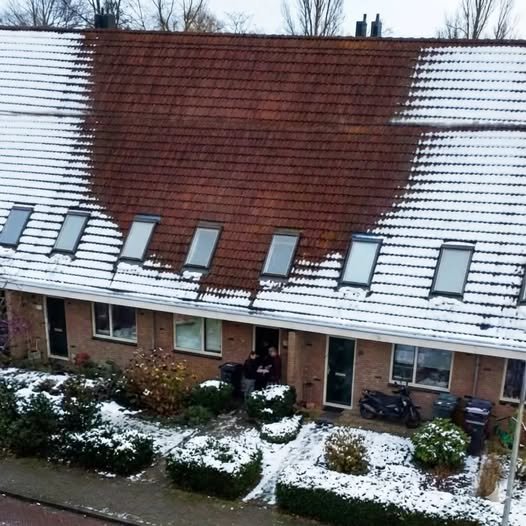

Snow blanketed the neighborhood, coating cars, trees, and rooftops in a pristine layer of white—everywhere except one house.
At first, neighbors assumed it was a fluke: perhaps wind, insulation, or sunlight had kept that roof clear. But as the snowfall continued and the roof remained bare, curiosity gave way to concern. Something unusual was clearly happening inside.
When authorities investigated, the reason became apparent. The home was the site of an illegal indoor cannabis grow, and the powerful lights and heating equipment used for cultivation had produced enough heat to melt the snow on contact. What initially seemed like a harmless winter oddity turned out to be a clear, if subtle, warning sign of high energy use and illegal activity.
Officials noted that this pattern is not uncommon during colder months. Unusually warm rooftops can indicate intense indoor electricity consumption, often linked to hidden operations like grow houses. In this case, the homeowner now faces legal consequences—not because of the melted snow itself, but because of the choices and activities causing it.
The incident serves as a reminder that small, curious details in a neighborhood can sometimes point to larger, unexpected realities. Even a patch of bare roof in the middle of a snowy street can tell a story about what’s happening behind closed doors.