
Gardening has a way of turning even the most ordinary days into little adventures. I spend countless hours in my garden—my personal sanctuary—tending to flowers, vegetables, and shrubs, finding joy in seeing them flourish. But as any gardener knows, surprises often come in small, unexpected packages, and learning to distinguish helpful insects from harmful ones is part of the journey.
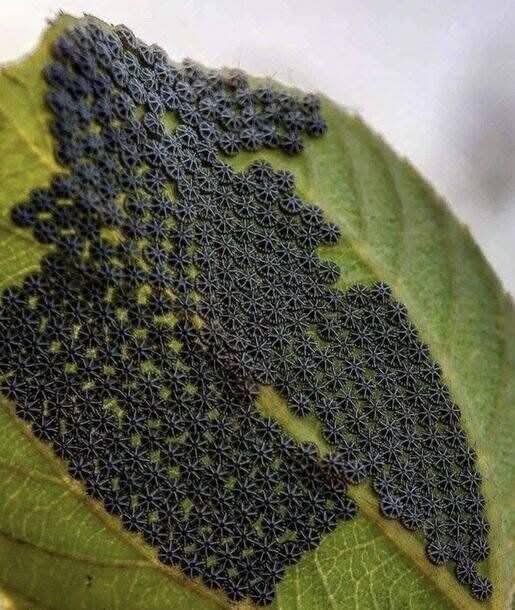
Recently, while inspecting a leafy branch, I noticed tiny black patterns scattered across a leaf. At first glance, they looked almost like decorative speckles, the kind you might find in a craft project. Curiosity got the better of me, and I decided to investigate. After some research, I discovered that the patterns were in fact eggs laid by the Mourning Cloak butterfly (Nymphalis antiopa).
The Mourning Cloak is an extraordinary butterfly that plays a beneficial role in the ecosystem. While it’s true that its caterpillars feed on leaves, they tend to prefer trees like willow, elm, and poplar rather than the vegetables or ornamental plants in most home gardens. This makes them generally harmless—and even welcome—visitors for gardeners seeking to maintain a natural balance in their green spaces.
As the caterpillars mature, they undergo an incredible transformation into butterflies with deep brown wings edged in vibrant yellow and accented with small blue spots. One remarkable trait of the Mourning Cloak is its ability to hibernate during winter, reemerging in early spring to continue the life cycle. Watching these butterflies flutter through the garden is a reminder of the resilience and beauty of nature.
For gardeners, spotting these unusual eggs can be an exciting and educational experience. What might initially seem like a mysterious or concerning sign often turns out to be something fascinating and beneficial. It’s one of the joys of gardening: the way it connects us with the rhythms of nature, teaching patience, observation, and appreciation for even the smallest creatures that share our spaces.
Sometimes, the most surprising discoveries in the garden turn out to be a glimpse into nature’s intricate and beautiful balance—a reminder that every leaf, caterpillar, and butterfly has a story worth noticing.